Content Note: This article discusses child abuse in a respectful, non-graphic manner. The story is fictionalized but inspired by experiences commonly shared by survivors and child protection professionals. The child’s identity and circumstances have been created to protect privacy while highlighting real psychological experiences.
For nearly a year, ten-year-old Anaya (name changed) carried a secret she never wanted. She believed child abuse was her fault – a thought that no child should ever have to carry alone.
Every morning, she smiled just enough to convince everyone she was fine. She went to school. She finished her homework. She played with her friends when someone asked.
But inside, she carried questions no child should ever have to ask:
- “Did I do something wrong?”
- “If I tell someone, will they blame me?”
- “Maybe this happened because I wasn’t careful enough.”
Those thoughts grew louder every day.
The Weight of Self-Blame
Children often see adults as people who know everything and are always right. When someone they trust hurts them, their minds struggle to make sense of it. Instead of blaming the adult responsible, many children turn the blame inward.
They tell themselves things like:
- “I should have said no.”
- “I shouldn’t have gone there.”
- “Maybe I misunderstood.”
- “Nobody will believe me.”
- “If I tell someone, everyone will hate me.”
Self-blame becomes a prison. It steals childhood long before anyone realizes something is wrong.
The Signs Nobody Recognised
Anaya slowly changed. She stopped laughing at jokes she once loved. She no longer wanted to draw. She became unusually quiet. Her grades started slipping. She avoided family gatherings. She struggled to sleep and often complained of stomach aches before school.
Adults noticed the changes — they just misread them. Some called her “moody.” Others assumed she was simply growing up.
No one asked the one question she needed most:
“Is something making you feel unsafe?”
One Conversation Changed Everything
One afternoon, her class teacher noticed Anaya had been sitting alone for weeks. Instead of scolding her for being distracted, she gently asked, “You’ve seemed worried lately. Would you like to talk?”
At first, Anaya shook her head. Days later, she quietly whispered, “I think everything is my fault.”
Those words broke the silence she had carried for months.
The teacher listened patiently. She didn’t interrupt. She didn’t question her. She didn’t blame her. She simply said:
“What happened to you is not your fault.”
For the first time, Anaya cried without trying to hide her tears.
Hearing the Truth
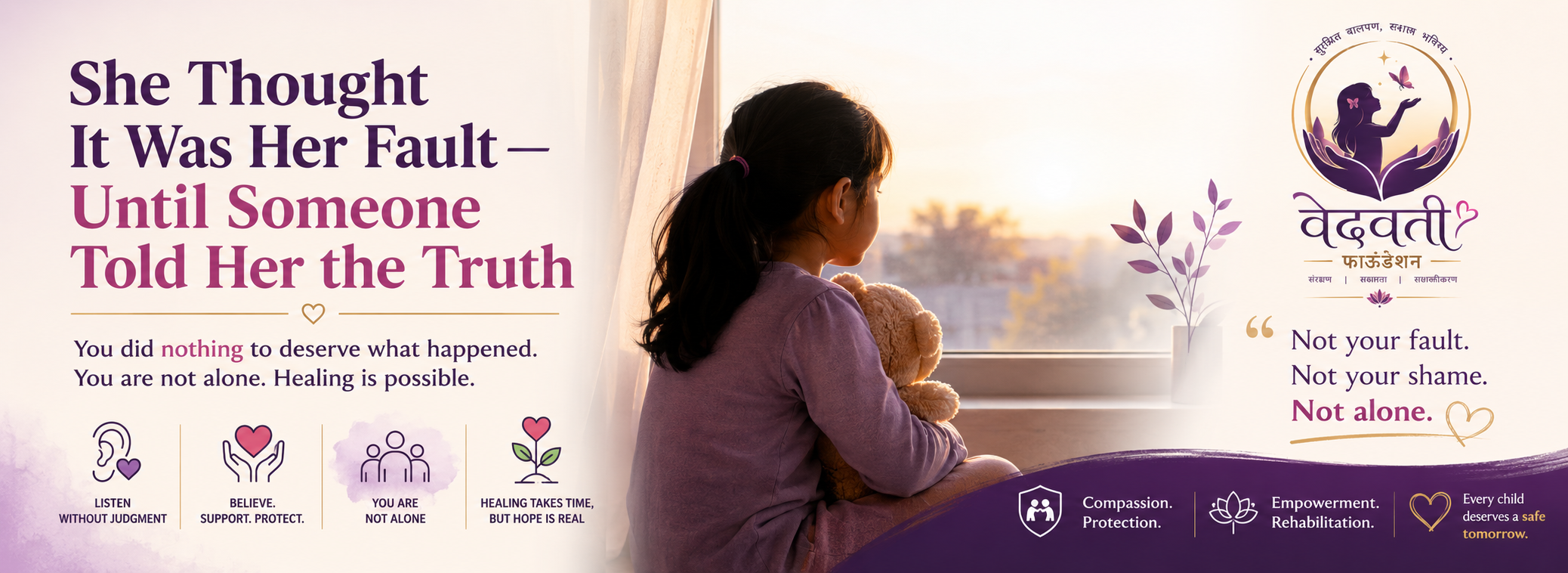
Those seven words became the beginning of healing: “This was not your fault.”
Children who experience abuse often need to hear this again and again before they truly believe it. Trauma changes how children think — it convinces them they are responsible for something they never chose. Replacing guilt with truth takes time, patience, and consistent support.
Healing begins when someone helps a child understand one simple fact: the responsibility always belongs to the person who caused the harm — never the child.
Healing Isn’t About Forgetting
Many people think healing means pretending nothing happened. It doesn’t. Healing means helping a child feel safe again.
For Anaya, healing looked different every month. Some days she smiled. Some days she cried. Some days she felt angry. Some days she wanted to be alone. Each emotion was part of her recovery.
Through professional counselling, she slowly learned how trauma affects thoughts, emotions, and behaviour. She discovered that fear was normal. Sadness was normal. Confusion was normal. None of it made her weak.
The Role of Family
When Anaya finally shared her story with her parents, they made a choice that changed her future. They believed her. They protected her. They reminded her every single day that she had done nothing wrong.
Instead of asking, “Why didn’t you tell us earlier?” — they asked, “How can we help you feel safe today?”
That difference mattered. Children heal faster when trusted adults respond with love, patience, and belief instead of blame or disbelief.
Slowly Finding Herself Again
Healing wasn’t immediate. It happened one small step at a time.
She returned to painting. She began laughing with friends again. She joined her school’s drama club. She started answering questions in class. She smiled more often.
Most importantly, she no longer believed she deserved what happened. Her confidence didn’t return overnight — it returned because people consistently reminded her that she mattered.
What Every Adult Should Know
If a child ever discloses abuse:
- Stay calm.
- Listen without interrupting.
- Believe them.
- Reassure them they are not to blame.
- Avoid asking leading or unnecessary questions.
- Seek appropriate legal and professional support.
- Continue supporting them long after the disclosure.
Sometimes, your response becomes the turning point in a child’s recovery.
How Vedavati Foundation Can Help
At Vedavati Foundation, we believe that healing begins with compassion, dignity, and the right support. We work to:
- Promote child safety awareness
- Guide families toward appropriate counselling and legal support
- Encourage survivor-centred care
- Advocate for long-term rehabilitation rather than short-term intervention
Every child deserves to grow up feeling safe, valued, and heard.
A Truth Every Child Deserves to Hear
If there is one message every survivor should carry, it is this: you did nothing to deserve what happened.
You are not broken. You are not guilty. You are not alone. And with the right support, healing is possible — because no child is ever responsible for abuse.
If you or someone you know needs support around child abuse or its effects, please reach out to a licensed counsellor, a child protection professional, or a national child helpline in your area.